4 June 2025

In today’s rapidly evolving world, keeping up with new opportunities often requires not just effort but also adaptability. The chance to access quality education, meaningful employment, digital skills, and professional networks — these are the kinds of opportunities that drive personal and economic progress. Yet, these opportunities are often out of reach for many. They should be accessible to everyone, but that’s only possible when the right systems and support structures are in place. This is where social mobility becomes essential.
Social mobility refers to a person’s ability to move between different social and economic levels, either across generations (intergenerational mobility) or during their lifetime (intragenerational mobility). As global connectivity increases — what Marshall McLuhan famously called the “global village” (watch here) — we’re more culturally, professionally, and socially intertwined than ever before.
In such a world, social mobility isn’t just desirable, it’s essential. It fosters a dynamic and innovative environment by bringing together people from diverse backgrounds, experiences, and skills. This not only enhances business performance but also helps reduce societal inequalities. Yet, many communities are still left behind, unable to benefit from these changes. Closing that gap is one of the most urgent challenges of our time.
Understanding and supporting social mobility is therefore key to building equitable, inclusive societies where everyone has the chance to succeed.
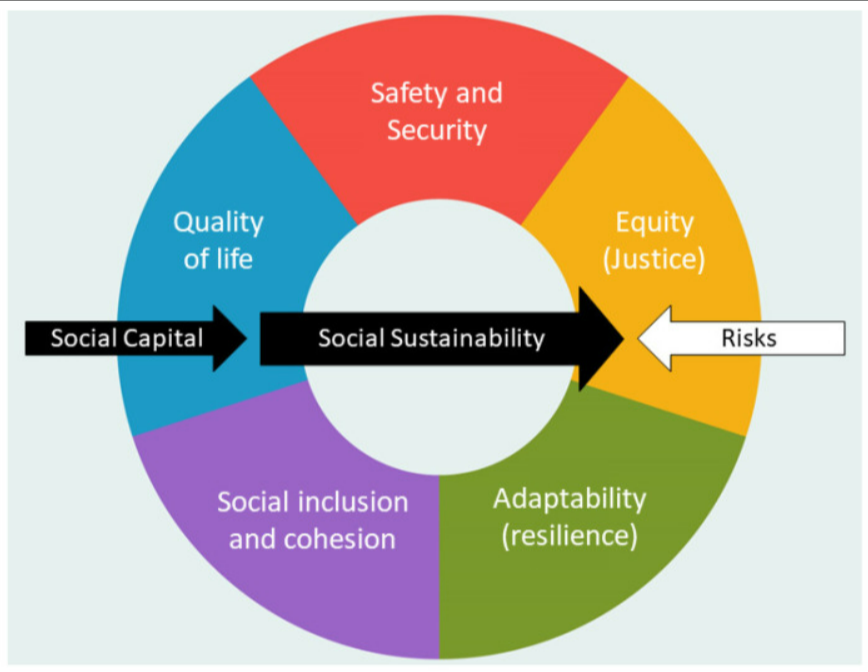
As outlined in this research article, social sustainability is the backbone of any truly inclusive and resilient society. It emphasizes equity, community participation, and trust — especially important in multicultural societies often described as “melting pots.”
By promoting inclusive decision-making and community engagement, socially sustainable approaches bridge cultural divides and strengthen social cohesion. These practices not only benefit marginalised groups but also make entire communities more adaptable to challenges such as economic uncertainty or climate crises.
In short, social sustainability supports the idea that diversity is a strength — one that must be nurtured for social mobility to thrive.
Education remains one of the most powerful tools to promote social mobility. As the Equality Trust highlights, it can dramatically improve life chances, especially for those from disadvantaged backgrounds. Education enhances skills and qualifications, unlocking access to better jobs and higher incomes.
However, the nature of work is rapidly changing — automation, AI, and emerging technologies are reshaping the job market, requiring new skill sets. This raises a vital question: Can digital skills serve as the new foundation for social mobility?
Organizations like Breakthrough Social Enterprise believe that digital inclusion is key to unlocking social mobility. At the core of our mission is a firm commitment to equity, access, and inclusion. We are driven by the belief that everyone — regardless of their background — should have the opportunity to thrive in a digital-first world. Our ethos is built on removing systemic barriers, promoting fair access to opportunities, and ensuring that the future of work is open to all, not just a few.
Our approach is grounded in practical impact and learner-centred design. Through initiatives like our Skills Bootcamp or online courses, we deliver industry-relevant training in high-growth areas such as data, digital marketing, and tech literacy. But we go far beyond technical instruction. Our training is designed to build long-term employability, combining digital upskilling with mentorship, wraparound support, and inclusive hiring pathways.
We recognise that career success requires more than just hard skills. That’s why our programmes also focus on confidence-building, career navigation, and developing adaptable, future-ready mindsets. We work closely with employers and community partners to ensure our learners aren’t just trained — they’re prepared, supported, and connected to opportunities that reflect their aspirations.
In everything we do, Breakthrough’s ethos is to empower, not prescribe — enabling individuals to define success on their own terms and access the tools to achieve it. Digital inclusion is not just part of the solution — it’s the key that unlocks social mobility.
Digital literacy is quickly becoming an essential requirement for participation in the global economy. According to The Center for Digital Equity, digital inclusion depends on three key pillars: accessibility, connectivity, and digital literacy — like a stool, if one leg is weak, it can’t stand. Digital inclusion works the same way — access, connectivity, and digital skills must all be strong and equally supported. Without all three, people are left unsupported and unable to fully access opportunities in work, learning, and everyday life.
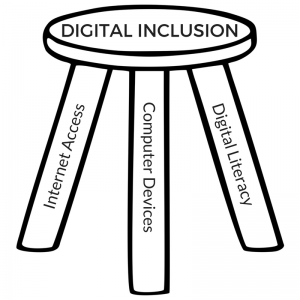
While many governments have invested in internet infrastructure and increased public access — such as London’s rollout of a world-class 5G network (City of London report) — digital literacy remains the most neglected yet essential component.
Nearly 70% of the world’s population owns internet-enabled devices (Ofcom report), but access alone is not enough. Without the skills to use digital tools effectively — such as interpreting data, using AI tools, managing digital campaigns, and communicating effectively across platforms — including personal branding, people remain excluded from the benefits of the digital economy. These aren’t just technical skills; they’re the building blocks of problem-solving, creativity, and competitiveness in modern industries. That’s why Breakthrough’s programmes are designed to develop not just digital access, but digital confidence — so learners can apply these tools in real work settings, adapt to evolving roles, and shape their own career paths.
Education again becomes the keystone. Digital equity — the condition in which all individuals have the skills and tools needed for full participation in society — is critical for civic engagement, employment, lifelong learning, and access to services. Moreover, digital inclusion enhances health literacy and empowers people with disabilities to participate fully in life and have equal opportunities.
To truly bridge the digital divide, all three pillars of digital inclusion — accessibility, connectivity, and digital literacy — must be given equal attention. Focusing on just one or two creates imbalance, leaving many still excluded from real opportunity. Balancing them means not only expanding infrastructure and affordable access, but also investing in education, skills training, and ongoing support. When all three are supported in tandem, individuals are empowered not just to connect, but to contribute, compete, and thrive in a digital world. This balance is what turns access into equity — and potential into progress.
So, why does digital inclusion matter for social mobility? Because it acts as a gateway to opportunity. It helps people step out of limiting environments and access meaningful pathways to economic and social advancement, and empowering the future.
Breakthrough Social Enterprise is at the forefront of this mission. Dedicated to closing the gap between untapped talent and high-growth industries, Breakthrough empowers individuals from underrepresented backgrounds with digital skills, personal development support, and clear career pathways.
Founded with the belief that talent is everywhere but opportunity is not, Breakthrough’s education programmes are designed to uplift those who have faced barriers to traditional career paths — offering not just training, but transformation.
Access Denied: Digital Inclusion Holds the Key to Social Mobility was originally published in breakthrough on Medium, where people are continuing the conversation by highlighting and responding to this story.
Are you ready to kickstart a career in the tech industry? Breakthrough Social Enterprise is excited to announce our upcoming…
members to give back by conducting mock interviews and providing employability clinics for at-risk young people and prison leavers. Here’s…
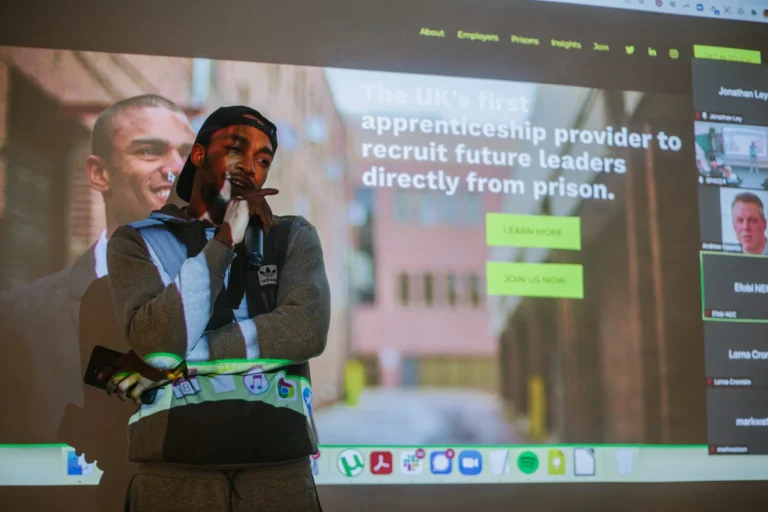
Returning to prison, but this time as a staff member and not a prisoner, was daunting. I instantly tensed up…

