8 July 2025

Imagine your city being almost fully governed by computers, where even planting can be scheduled by virtual calendars and done by machines — sounds futuristic? The rapid evolution of artificial intelligence runs on a promise to enhance efficiency — but it also faces growing social and environmental concerns that are evolving around the use of artificial intelligence in urban environments.
As Neil Leach claims “AI is both incredible and terrifying”, in respect to the development of cities. We are moving beyond job displacement fears to worries about AI managing entire cities. This fear raises questions about the alignment of AI applications with social well-being. However, what if AI actually could serve people better? We should consider the potential for AI to enhance people’s comfort, inclusivity, and overall quality of life in urban settings.
This is where AI plays a role in designing fairer cities. The UN divided applications of AI in cities into different categories:
From analysing data to optimising operation, production and consumption. But most importantly, in regard to climate change, AI emerges as a vital ally, enabling urgent and essential climate-resilient development. By mitigating climate change it is becoming the next leader in making a real sustainable change. AI applications transform urban planning with economic and community resilience, including digital twin technologies, smart grids, and IoT-based predictions and planning.
Beyond functionality, AI also addresses carbon reduction goals. By optimizing energy grids and waste systems, integrating renewables, and minimizing emissions, AI technologies are guiding us toward sustainable, urban futures. Cities like Kelowna, British Columbia, in Canada, in collaboration with AI for Good implemented solutions to increase resilience in environmental and climate instability. Reducing the flooding risk, Kelowna has applied advanced technologies, including a LiDAR (Light Detection and Ranging) mapping project of Okanagan Lake, to improve flood mitigation. LiDAR uses laser pulses to generate precise 3D information of the area, helping the city better understand flood risks, optimize responses, and plan for climate resilience.
Moreover, for risk management, the ability of AI is to simulate city operations in real-time using digital twins — virtual replicas of physical environments fed by data from IoT devices. This helps planners test multiple scenarios: how to prevent flooding, mitigate traffic congestion, or prepare for heatwaves and overpopulation.
California has used AI tools like predictive analytics and GIS-based modeling to identify where affordable housing and Accessory Dwelling Units (ADUs) could be added without displacing vulnerable residents. By combining this with Community Land Trusts (CLTs), the city ensured that technology helped target solutions where they were most needed, supporting its goal of building a fairer, more inclusive city.
More than just optimizing, AI helps minimize inequalities across communities by
The development of data analysis, 5G introduction, and the Internet of Things (IoT) have elevated the Smart City concept, providing a foundation for digitally-driven urban design, where AI is taking a lead in this process and helping cities become more livable and resilient.
Practical applications include using a core smart city solution, which is digital twin technology — across the globe, from Kelowna to Bangkok, where AI powers a comprehensive digital twin that integrates 3D LiDAR mapping, IoT sensor data, and predictive analytics to model complex urban systems in real time. This technology enables cities to simulate scenarios such as flooding, traffic congestion, and infrastructure stress, supporting data-driven decisions that prioritize equitable resource allocation and resilience. By anticipating risks and optimizing interventions, Bangkok’s digital twin helps protect vulnerable communities and advance inclusive urban development.
This reflects the implementation of AI in the built environment globally, but more importantly, highlights its local application. With the provision of resources and tools by intergovernmental organizations such as UN-Habitat — supporting urban design and smart city infrastructure deployment — urban planners are better positioned to navigate this digital transition and understand their evolving professional functions.
Urban planners face significant challenges, especially when it comes to making long-term predictions over a thirty-year horizon. In the context of modern cities, these forecasts are inherently complex — made even more so by the growing impact of climate change. While professionals in the built environment are striving for sustainability, it’s clear that the future will also be digital. Building a fair and inclusive future means fully embracing new technologies and integrating digital solutions into urban planning and development.
Previously, the smart cities concept was separate from the sustainable cities concept, but today they are often used inseparably thanks to AI making cities sustainable through smart solutions. AI-driven systems can substantially make cities more sustainable and ecofriendly from economic to social aspects paving the way toward a low-carbon future and achieving net-zero goals. As one example is Smart Energy, by optimising energy consumption efficiently through smart lighting, managing energy grids, integrating renewable energy sources, controlling and optimizing energy distribution.
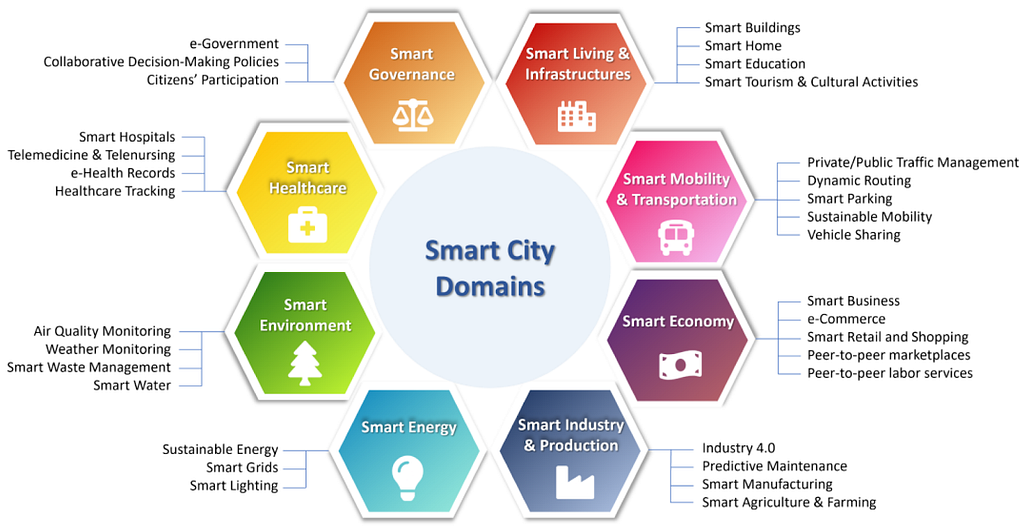
The Smart City paradigm is evolving from smart to fair — where technology and AI are used not only to optimize urban systems, but to advance equity, inclusion, and justice. AI supports this shift by predicting outcomes and guiding decisions that reduce inequalities, protect vulnerable communities, and create more accessible, sustainable, and resilient cities. Intelligence in this context means responsibility: using data not just for efficiency, but for building urban environments that serve everyone.
Contemporary urban planning extends beyond traditional concerns such as zoning regulations and infrastructure; consequently, urban planners, policymakers, technologists, and community stakeholders must engage in collaborative endeavors to ensure that the city operates properly, enforcing equity, rather than perpetuating bias.
AI does not inherently guarantee fairness — to build fairer cities, AI must be fundamentally designed with fairness in mind. As cities embrace AI as part of their smart transformation, the challenge is no longer just about building efficient, optimized urban systems. The real test is whether AI can help design fairer cities — places that not only function better but actively reduce inequalities, promote inclusion, and support social mobility. AI’s potential lies in how deliberately we choose to apply it: whether it reinforces existing divides or helps redistribute opportunity and well-being in ways that create more just, resilient urban futures. The responsibility now rests with planners, policymakers, and communities to ensure that AI serves as a tool for equity, not just automation.
AI contributes to fairer cities by:
Is artificial intelligence capable of managing the fair city and aiding in the design of equitable urban centers? Undoubtedly — provided that its implementation is guided by intentional values of fairness, inclusivity, and social justice. A fair city is not defined solely by accessibility or economic opportunity; it is one in which every individual, regardless of background, ability, or identity, feels a deep sense of belonging and dignity.
From an urban planning perspective, technology — particularly AI — serves not as a replacement for human judgment but as a powerful facilitator of equity-driven design. Whether through smart city initiatives that streamline public services, or digital platforms that amplify community voice and participation, AI can play a pivotal role in reshaping the urban landscape for good.
But this transformation must be values-led. AI must be programmed not just with code, but with conscience — aligned with global frameworks such as the UN Sustainable Development Goals (SDGs).
At Breakthrough, our SDG Online Courses equip changemakers, planners, technologists, and community leaders with the knowledge and tools to embed these principles into real-world practice. These courses are designed to translate ambitious global goals into local, actionable strategies — including how to responsibly integrate AI and digital technologies into urban development.
In this light, AI becomes more than a tool for optimization. It becomes a city manager of the future: a force that can move urban centers beyond efficiency toward inclusion, sustainability, and justice. The fair city isn’t just a technological dream — it’s a shared responsibility. And with the right frameworks, we have the power to design cities that are not only smarter, but genuinely built for everyone.
Equip yourself with the tools to build fair cities, shape shared futures, and code justice into the world around you.
REFERENCES
AI for Good. (n.d.). AI for Good. https://ai4good.org/
AI for Good. (2022). City of Kelowna: Final report. https://ai4good.org/wp-content/uploads/2022/04/KelownaFinalReport-1.pdf
AI for Good. (2022). City of Long Beach: Final report. https://ai4good.org/wp-content/uploads/2022/04/lbfinalreport_reviewed.pdf
Arup. (2021). AI for future cities: Urban planning and design. https://www.arup.com/globalassets/downloads/insights/a/ai-for-future-cities-urban-planning-and-design/ai-for-future-cities-urban-planning-and-design-v1.pdf
Bellini, P., Nesi, P., & Pantaleo, G. (2022). IoT-Enabled Smart Cities: A Review of Concepts, Frameworks and Key Technologies. Applied Sciences, 12(3), 1607. https://doi.org/10.3390/app12031607
Breakthrough Social Enterprise (2025). Access denied: Digital inclusion holds the key. Retrieved 23.06.2025, from https://www.linkedin.com/pulse/access-denied-digital-inclusion-holds-key-eu3he/?trackingId=KZ1gG1yuaZVebAxCn0V5hg%3D%3D
BRIGHT SIDE.(2023) “We Asked AI to Design the City of the Future.” YouTube, https://www.youtube.com/watch?v=CmUuvEc1o48. Accessed June 16, 2025.
Costanza-Chock, S.,. (2018). Design justice: Dismantling the matrix of domination through design [Video]. YouTube. https://www.youtube.com/watch?v=-syfaKGpiG8
European Commission. Smart Cities. European Commission, https://commission.europa.eu/eu-regional-and-urban-development/topics/cities-and-urban-development/city-initiatives/smart-cities_en
Gupta, I (2024), Bangkok city’s digital twin. Retrieved 23.06.2025, from https://www.linkedin.com/pulse/bangkok-citys-digital-twin-ira-gupta-zwdlc/
Helmbold, Aidan. (2024) “AI in Urban Planning: Using Tech to Redefine City Design.” Sand Technologies, https://www.sandtech.com/insight/ai-in-urban-planning-using-tech-to-redefine-city-design/
Inxee Systems. The Smart City Paradigm (2023). LinkedIn, https://www.linkedin.com/pulse/smart-city-paradigm-inxee-systems
Sand Technologies. Digital Twins. Sand Technologies, n.d. https://www.sandtech.com/service/digital-twins/
UN-Habitat. For a Better Urban Future. UN-Habitat, n.d. https://unhabitat.org/
UN-Habitat. (2022). Artificial intelligence and cities: Risks, applications and governance. United Nations Human Settlements Programme (UN-Habitat). https://unhabitat.org/sites/default/files/2022/10/artificial_intelligence_and_cities_risks_applications_and_governance.pdf
UN-Habitat.(2025) International Guidelines on People-Centred Smart Cities: Smart Cities for People — Empowering Lives, Protecting the Planet, Advancing Prosperity. UN-Habitat. https://unhabitat.org/programme/people-centred-smart-cities
United Nations Economic Commission for Europe. Smart Sustainable Cities. UNECE, n.d. https://unece.org/housing/smart-sustainable-cities
United Nations Development Programme. (2024). What is climate change mitigation — and why is it urgent? UNDP Climate Promise from https://climatepromise.undp.org/news-and-stories/what-climate-change-mitigation-and-why-it-urgent
CODING JUSTICE: AI AND THE FUTURE OF CITY MAKING was originally published in breakthrough on Medium, where people are continuing the conversation by highlighting and responding to this story.
Are you ready to kickstart a career in the tech industry? Breakthrough Social Enterprise is excited to announce our upcoming…
members to give back by conducting mock interviews and providing employability clinics for at-risk young people and prison leavers. Here’s…
Returning to prison, but this time as a staff member and not a prisoner, was daunting. I instantly tensed up…

