21 December 2025
This is part of a series; please read the previous blogs here.
After weeks of experimenting, removing, rebuilding, and doubting herself, Layla finally stopped asking what her AI system could do. She asked what it should do. The result was not impressive. It was not maximal. It was sufficient. For the first time, she had built a human-scaled AI system that matched her pace rather than her ambition.
This was not accidental. It was intentional AI design in practice. Layla had stopped copying other people’s setups and started building a personal AI architecture that reflected how she actually worked.
When people ask “How do I build a human-scaled AI system?” they often expect a list of tools. Layla learned that the answer starts with restraint.
A human-scaled AI system is not about power. It is about proportion. It fits into the edges of your day rather than taking it over. It supports decisions instead of multiplying them. This is what is a human-scaled AI system in real terms. One that stays close to human limits.
Layla began by assigning roles. Not vague ones. Specific responsibilities. Each tool had one job and one job only. This is where AI tool roles defined stopped being a theory and became a practice.
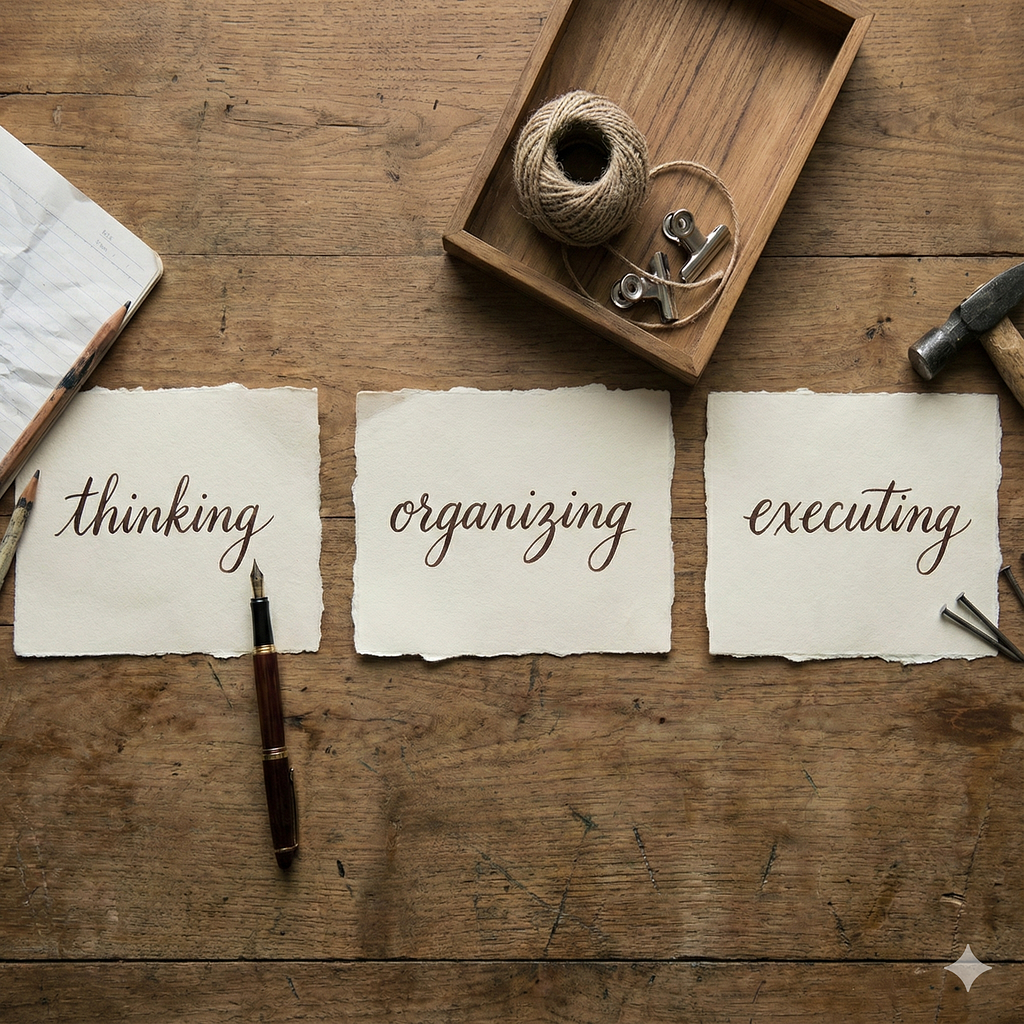
She treated her setup as a role-based AI architecture. One tool helped her think. Another helped her organise. Another supported execution. None of them overlapped. None of them competed.
This was intentional tool selection rather than accumulation. Layla learned to assign clear responsibilities to AI tools so that she could avoid redundant AI tools. The result was calmer work and more efficient AI workflows.
When asked, “What is the role of each AI tool?” she could answer clearly. That clarity mattered more than features.
Without boundaries, Layla noticed that tools began to blur. Tasks repeated. Outputs conflicted. She felt pulled rather than supported. This is where AI boundaries and constraints became essential.
Boundaries created safe AI workflow limits. They helped her understand the difference between scalable vs bounded AI systems. She was not building for scale. She was building for sustainability.
By defining limits, she could prevent overlap in AI tool tasks and find a workable balance between AI capability and control. These were her AI guardrails for personal workflows.
So when people ask “What are boundaries in AI design?” Layla’s answer is simple. Boundaries are what make systems usable over time.
Layla then asked a harder question. Why does this tool exist here?
Every component had to earn its place. This is how purpose-driven AI tools replace novelty. She practised intentional tool justification until her setup became a minimal AI setup by design, not by trend.
She applied one rule. Each AI tool must justify its existence. If it did not maximize value, minimize complexity, it went. She learned to eliminate unnecessary AI features and commit to pragmatic AI tool selection.

When someone asks “How to justify including an AI component?” the answer is not capability. It is contribution.
What Layla ended with was not aspirational. It was real. This was personal AI vs aspirational AI made visible. The system worked on tired days as well as motivated ones. It reflected quiet competence in AI design.
Her setup was AI that adapts to real needs. It was a sustainable AI setup that supported everyday AI workflow improvements. This is what human-centric AI design principles look like when applied honestly. It is AI that meets not exceeds needs.
So when asked “How do I make AI personal to me?” or “What’s the difference between personal and aspirational AI?” Layla’s system answers without explanation.
This is an intentional AI architecture recap in practice. The benefits of a human-scaled AI system are not speed or scale. They are clarity and continuity. When you design AI with purpose, you build something that stays with you.

This summary of practical AI setup reinforces one thing. Systems grow best when they are grounded. An AI setup that grows with you begins by respecting your limits.
When people ask, “What are the key takeaways in intentional AI design?” the answer is restraint. When they ask, “Where to go from here with my AI setup?” the answer is inward.
Over the last 2 weeks, we have seen Raj, Cameron and Layla understand AI better with each step. They have been going from being AI literate to AI fluent. You can also join our batch of AI literate to AI fluent. Click here to sign up now!
The Relearning Season | Intentional AI design for practical everyday use was originally published in Breakthrough Social Enterprise on Medium, where people are continuing the conversation by highlighting and responding to this story.
Are you ready to kickstart a career in the tech industry? Breakthrough Social Enterprise is excited to announce our upcoming…
members to give back by conducting mock interviews and providing employability clinics for at-risk young people and prison leavers. Here’s…
Returning to prison, but this time as a staff member and not a prisoner, was daunting. I instantly tensed up…

